Sunday, April 26, 2009

Real birding

Common Sandpiper

Broad-billed Sandless Scaling Dam did have a Ruff, 5 Common Sandpipers, 2 LRPs, one Cuckoo and a Lesser Whitethroat. I couldn't raise the enthusiasm to pop back to see the escaped Ruddy Shelduck reported later.

On the moor here there were about 25 Green Hairstreaks.

Green Hairstreak on Gorse

Today I went searching again for Lesser Spotted Woodpecker which I am fairly sure I have heard twice now at one of my Atlas squares, fairly sure but it needs confirming. Not a tap or keek this morning but excellent views of singing Redstart of which there are at least five at this spot. See side panel for video.

Here's the White Wagtail from last week, on the pole, note the flusher.

Startrek birding


"Spock, you fool! It's the wrong month for Broad-billed Sand, and trying to make up for it by letting a Ruddy Shelduck loose from Roxby just doesn't cut it. One Ruff, five Common Sandpipers and a Redshank were all I could find. Beam me up Scottie."

Friday, April 24, 2009

Vulcan Rareometer computes


"My computations, adjusting weather conditions against knowledge of migratory habits,indicate that tomorrow a Broad-billed Sandpiper will be found on the muddy banks of nearby Scaling Dam. I will rise early, clean behind my ears and seek this rare, wading bird with diligent and careful searching."

Sunday, April 19, 2009

Calls

Just now I heard a distant Whimbrel from the garden, I think. It was just a bit distant and it only called twice, in the end I decided not countable for the tetrad. At the beginning of the week I was puzzled by a call which was repeated over about three minutes or so, it seemed to be coming from a bird that was flying around high up. Later when I could check I listened to Bee-eater calls which the mystery sound had reminded me of. Close but not quite the business, the flutey, whistley bit was in there but not the prrupping noises. Still don't know what it was, I suspect it actually was a bee-eater, though none have been recorded elsewhere and it is a bit early - that or wild imagination.

The White Wagtail business earlier in the week was interesting, in the past I was pretty adamant that they could not be done on call and had tested this in Europe. But the bird the other day I picked up on call straight away, a good test.

Sunny today, the first blue sky we've had for over a week I think. I'll sit outside and listen some more.

Friday, April 17, 2009

Owling time

Due to the local penchant for annihilating owls I'm going to be circumspect about giving an indication where I see them. This evening's outing showed only too clearly what the problems are: managed grouse moors with miles of suitable habitat - no owls; place with no shooting - Short-eared Owl found within five minutes. These moors should have a pretty good population of S-eOs on habitat availability, the reality is that this species is very uncommon and hard to find in the breeding season.

I am told by reliable sources that S-eOs are targeted by the keepers. I have also been informed of the deliberate shooting of a Tawny Owl. Now I'll warrant that S-eOs may take the occasional small grouse chick but it is well known that they are almost entirely dependant on small mammals, I believe that the taking of grouse and other bird chicks is unusual. Tawny Owl will pose almost no threat to game birds, indeed they are likely to deal with the species that predate them, Brown Rat for example. But in this neck of the woods it seems "There's too many hawks." and owls, no doubt.

Did I come across a Hen Harrier during my evening outing? You must be joking. Last breeding here in 2003 and now very uncommon in winter, let alone breeding. What is the National Park doing about this? Absolutely nothing, indeed correspondence that I have had reveals a denial of the truth that it is human activities that limit Hen Harriers here, instead the old chestnut of ccomplexity was trotted out. Complexity my foot.

Now I've got that off my chest what was going on at misty Scaling Dam earlier today? From the Yorkshire end I espied a small flock of hirundines, so with R-rS ever on my mind at this season I leapt back in the car and headed for Cleveland. 47 Swallows, 5 Sand Martins and 2 House Martins was my haul, actually staying just the Yorkshire side of the border. However, up by the hide a slight accent to a call caught my attention, somewhere here there's a White Wagtail. That's not a White Wagtail but aha, that one is.

A few years back I was involved in some discussion about whether or not M.a.alba is separable from M.a.yarrelli on call. At the time my view was not. However, I have changed my mind, I seem to be able to tune in to them these days. There is a grey wagtailish sharpness to alba's call to my ear. I am happy with this in spring, however, autumn juveniles with their juvvy type calls are not so clear cut and I'm not sure its possible to separate them on call in autumn.

The other good bird was Stock Dove, not sure I've seen this species at Scaling before, there were two on the field across the road however. Reading the northern blogs Stock Doves seem to be on the move at the moment with birds turning up on Shetland. The other species scattered across the northern isles at the moment is Hawfinch.

Tree Sparrows are now daily in the garden and can be heard almost continuously chirping from nearby Hawthorns. The male Sparrowhawk is an almost daily visitor and a pair of Kestrel are prospecting.

Wednesday, April 15, 2009

Literate Herring, this way.

My new blog can be found here.

WhitbyBirding will continue for now but the baton will be passed, in a slow motion kind of a way, to my new blog - Literate Herring, this way.

Sunday, April 12, 2009

A good bit of birding, in two parts


Feeling somewhat less lurgified than of late and having keen and raring to go Nick C staying, elected to head for one of my "undisclosed sites" this morning for some raptorial entertainment. On arriving at the spot and walking down the hill we both appeared to get on to the bird in front of us at about the same moment and without raising the bins, even at 50 metres, managed the correct id - Great Grey Shrike. Nice! The bird performed rather well for the next hour or so, out of proper photo range but good enough. But one surprise was not enough as raising the bins for the expected, the unexpected appeared, a very nice Red Kite, no wing tags and a missing secondary from its right wing. This did not hang around but once up and in the air went high and away to the east in about 10 minutes. The expected also performed rather nicely which added to the morning's quality.

The middle of the day was spent walking a ridge with the family, but despite high expectations raptorial views were of one brief and distant bird that disappeared too soon for id.

On returning home and brewing needed tea a knock on the door occurred. A neighbour with a bird they could not identify around their house. These being neighbours who know their birds an investigation seemed appropriate as the bird sounded as if it might be a Black Redstart. Small person assistant in tow and tea transferred to thermal cup and 15 minutes later I was watching a slightly elusive but very pleasing Black Redstart feeding around the neighbours' outbuilding.

The wing panel was less clear in the field, looks like this is a 1st summer male.

Friday, April 10, 2009

Lurgy again

Aaaggggghhhh, I have the dreadful lurgy again. This does not seem fair. Birding currently cancelled. A brief venture outside found Willow Warblers and Chiffchaff singing.

Tuesday, April 07, 2009

Spring is here


There were three Willow Warblers singing on my round this morning. It is the song that most heralds the change of season for me, I love that melancholy accent. I also saw two dead lambs, various placentae and one sheep with the head of, what looked like, another rather dead lamb sticking out of it's rear.


Yesterday there were as many as five Sand Martins along the river at the Danby Moors Centre and I had a glimpse of a maybe House Martin but it disappeared all too swiftly.

We then went on to Whitby where there were piles of Herring Gulls which had followed the boats in and the usual very tame Turnstones.

Click the pic for Big Turnstone

Bird movements, me movements

I've been guilty recently of not reporting on some fairly interesting bits of movement - Saturday, Meadow Pipits were coasting and whilst I was by coastguards and then down at Saltwick there was a steady trickle heading north or westward.

Yesterday morning something stirred in Fieldfare world. En route to bacon-butty-baited Scaling Dam a large flock of about 300 lingered in trees with about 50 Redwing. Then at Scaling itself another 130 or so headed north, this time without accompanying smaller cousins.


Another significant movement may be taking place in the not too distant future as the WhitbyBirder is planning a permanent northerly migration. All is not confirmed yet but the delightful property below is now on the market (70 species in the garden or in direct airspace in three and a bit years), more on this later.
Click for link to estate agents.

Sunday, April 05, 2009

Runswick Bay

A very relaxed afternoon at Runswick Bay. Not really birding. Up by the car park - the top, free one - there were Tree Sparrows in the little field adjacent, no sign of the Marsh / Willow Tits though. Yellowhammer flew over.

On the way down to the beach there was Blackcap singing - probably two - and Chiffchaff was singing near the bottom boat club car park.

On the water were Eider, Shag and, well that was about it really.

Late afternoon at home as I was cooking the Chicken (one, deceased) a Marsh Tit came to the back feeders. The Niger feeder right by the kitchen window is already a big hit with Siskin, Goldfinch and Chaffinch using it regularly - don't know why they didn't like it when it was with the other back garden feeders but this is better as it is so much closer also.

Saturday, April 04, 2009

Swallows

Two Swallows on wires in the village as I drove to work in thick mist yesterday morning.

Tuesday, March 31, 2009

Migrant time

I walked out of a meeting at Caedmon School this morning to hear Chiffchaff singing. Later in the day, at home, early evening, I thought I heard another distantly from the garden.

Sunday, March 29, 2009

Lovely day here

In the garden the Tree Sparrows are becoming daily visitors to the feeders. Tawny Owls are very vocal during the day at the moment, one hooting at 10:30 this morning. A Buzzard flew straight through the dale shortly after (a or the) male Sparrowhawk had made an unsuccessful raid on the feeders.


Yesterday I had to combine work with birding, marshalling a fund raising treasure hunt, I was assigned to The Battery. Tucked in to avoid the northerly blast I steadied the scope sufficiently to pick out 7 or 8 Purple Sandpipers feeding at the base of the west pier; good numbers (c100 in an hour and a half) of Gannets were passing, mostly heading west; a few Kittiwakes; Eider offshore; but best were a female Goosander close inshore heading west and a high Red-throated Diver going east. Birding was of course regularly interupted to offer prizes to those that had managed to find me.


More work later, I was attending a Shakespeare festival where fittingly extracts of The Tempest were performed to the howl of the actual gale rattling the very structure of the Pavilion during the enactment of the play.

This morning the dale looked grand as I went out and about. Curlew are on territory and their familiar calls are now frequently heard from the garden.

As last year the gull flock has built up feeding in selected dale fields. There were very few gulls this winter but of late about 1,000 are feeding; Common Gull 70%, Black-headed Gull 29.9%, Herring Gull 0.1%.

Tuesday, March 24, 2009

Change to Italian hunting laws imminent - protest now

Join the campaign to try to prevent changes to Italian law about hunting wild birds. Click here for info.

Saturday, March 21, 2009

Garden day


A lovely day here in the North Yorks Moors. I spent the day recovering from recent travelling by lazing around at home. Siskin were singing in the garden and good numbers visiting the trees and feeders, a Tree Sparrow put in an appearance, at dusk two Long-tailed Tits were on the peanut feeder at the front. Chaffinch numbers are still quite high at 50 or so and Yellowhammers abound. Also of interest were 3 or 4 Small Tortoiseshell, the Large White, however, was released by the girls from their bedroom collection of pupae.

A Roe Deer was in the field below the house.

The large Slowworm found last week was found dead yesterday. Ellen named it Slither and spent half the morning carrying it around before making a garden home for it ....

Thursday, March 19, 2009

On the road ... rail, plane, taxi, bus, tube etc

No posts and no posts, WhitbyBiriding has been on the road. A no birding trip to London and adventures northward with little opportunity for birding (mega dip on a nearby Snowy Owl which I didn't even try for - shame). Nice flocks of Long-tailed Ducks though.

Sunday, March 01, 2009

Niger getting eaten

During much of the winter the Niger feeders have not attracted much interest but as spring is springing, the green shoots emerging, the Niger is being gobbled again. Chaffinches mostly but a few Siskin are now visiting regularly. Goldfinch continue to be very few and far between.

Ah, just seen a Jay from the window, 100 for the year.

In the autumn I omitted to report a Marsh Tit feeding on Niger. Ignoring the tasty peanut feeder nearby and the sunflower seeds around the back a Marsh Tit went five consecutive times to the Niger feeder, clearly took a seed, perched up in the tree and holding the tiny seed with its feet clobbered it in the usual style until it got the edible bit out. Not seen before or since but of interest I thought.

Monday, February 23, 2009

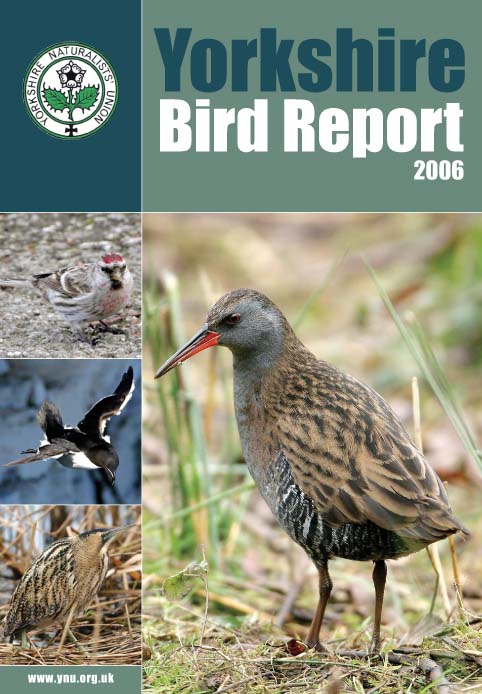
Yorkshire Bird Report 2006 published

The latest Yorkshire Bird report is now out and about.
£10 + £2 P&P to non-members from the following address. (Free to YNU members, £25 per annum, membership enquiries to: Mr J. A. Newbould, Stonecroft, 3 Brookmead Close, Sutton Poyntz, Weymouth, Dorset, DT3 6RS.)

Friday, February 20, 2009

Snow gone for now

As soon as the snow was on its way into the gutter birds began to sing. Song Thrush was singing at Runswick Bay on Monday and at home on Tuesday, today there were three singing in the morning. For a bird that I've not seen or heard around the garden for weeks their sudden emergence is interesting. Have these Song Thrushes come in or have they been skulking around all the time?

Also bursting into song around home were Mistle Thrush on Tuesday and Blackbird on Wednesday.

The Yellowhammers are no in evidence continually around the back garden feeders. They were absent until the beginning of last week from the New Year. Just before the New Year I only saw or heard the occasional bird for some weeks. This is the first time since 2005, when we arrived here, that this species has absented itself for any length of time. Did they know the snow was coming and move to lower ground?

Tree Sparrow has also reappeared although a little more sporadically, there was one on the feeder at the back this morning.

However, Marsh Tit has now disappeared. Having been so evident since the autumn there is now no sign of this species in the garden. Interestingly the Atlas site I covered yesterday, and have made the occasional visit to recently has also suffered an exodus of this species. Perhaps there is now sufficient natural food around and they don't need to lurk around the garden either here or at the Atlas site (where they were also found near feeders).

Lots of questions, not many answers.

I've had a few instances recently of Lesser Spotted Woodpecker reported in unlikely locations. I think these are misidentifications but .... It's always difficult to know what to do about these records, going to check them out is not usually fruitful with this species. I don't think this is a hard species to ID but maybe I'm just complacent. I haven't seen this species for quite a number of years now, I seem to have stopped bumping in to them. Yesterday's Atlas site looks perfect for them but after many visits at appropriate times of the year, no sight and more pertinately no sound.